Author: Darren Hughes

  • How much does conference AV production cost in the UK?

    How much does conference AV cost? It is the question everyone wants answered and almost nobody puts in writing, so here it is, honestly. Conference AV production in the UK can cost anywhere from around a thousand pounds to twenty thousand and beyond. That sounds unhelpful until you understand what moves the number, so let me break it down properly.

    The honest ballpark ranges

    Let me give you real figures, with the firm caveat that these are ballparks, not fixed prices. Every quote depends on the brief.

    A simple one-day event with basic audio provision and one or two screens or TVs is typically in the region of £1,000 to £2,000. That covers a lot of standard corporate meetings and smaller conferences.

    As soon as you add LED video walls, lighting, multiple conference days, a dedicated setup day, and a larger technical team, the price escalates quite quickly. At that point you are looking at £10,000, £15,000, £20,000, or more. The jump is not arbitrary, it tracks exactly what gets added.

    For context, we rarely work below about £1,000 to £1,500, and only then for very close contacts where we are supplementing a small gap in what they already have. Below that, you are usually better off with dry hire than full production.

    What pushes the price up

    If you want to understand your own quote, look at what is in it. These are the things that move the cost the most:

    LED video walls are the big one. They look superb and they are a significant cost. Lighting design and a proper rig come next. Then there is time: each additional conference day adds cost, and a dedicated setup day before the event does too. Finally, a larger on-site technical team to run a more complex show adds to the total.

    None of these are upsells for the sake of it. Each one does a job. The point is that you can see, fairly directly, why a five-figure quote is a five-figure quote.

    The thing most people do not realise: the venue matters

    Here is something that genuinely changes the cost, and it is worth knowing before you brief anyone. The cost varies a lot depending on what the venue already has in-house.

    We frequently supplement existing venue equipment with our expertise and some extra kit, rather than supplying everything from scratch. If your venue already has decent screens, a sound system, or rigging, that can bring the cost down a long way. A good AV company will ask what is already there and build the quote around it, not ignore it and quote for the lot.

    So one of the most useful things you can do is find out what your venue provides before you ask for quotes. It can be the difference between two very different numbers.

    Why budget belongs at the start of the conversation

    The reason I am happy to talk numbers openly is that getting budget out in the open early is the single best thing you can do for your own event.

    The way I always put it: if you expect Wembley but I quote for a local pub, you will not be happy with the outcome. If you want a local event but I quote for Wembley, you will not be happy with the quote. Telling an AV company your real budget early is not weakening your position, it is how you get a design and a price that actually fit.

    For more on picking the right supplier in the first place, see our guide on choosing a conference AV company.

    Frequently asked questions

    How much does conference AV production cost in the UK?

    As a rough guide, a simple one-day event with basic audio and one or two screens is around £1,000 to £2,000. Add LED video walls, lighting, multiple days, and a larger crew, and it can rise to £10,000, £15,000, £20,000 and beyond.

    What pushes the cost up the most?

    LED video walls, lighting design and rig, multi-day events, a dedicated setup day, and a larger on-site team.

    Does the venue’s own equipment reduce the cost?

    Often, yes. We frequently supplement what is already there rather than supplying everything from scratch, which can bring the cost down.

    What is the minimum PSL usually works to?

    We rarely work below around £1,000 to £1,500, and only for very close contacts supplementing a small gap.

    Planning a conference in North Wales or beyond?

    We provide conference AV production across North Wales, Chester, and the wider UK, and we will give you an honest quote built around your brief and your venue.

    Get in touch and tell us what you are planning.

    Darren Hughes is Director of Pivotal Sound & Lighting, an AV and event production company based in Llay, Wrexham, North Wales. PSL delivers conference and corporate AV for clients including Rolex, Google, and the Football Association of Wales.

  • The conference AV checklist: what to ask your production company in North Wales

    Most conference AV problems are not caused by equipment failure. They are caused by conversations that never happened.

    If you are organising a conference in North Wales and your production company has not asked you a lot of questions before the day, that is the first warning sign. A thorough conference AV company in North Wales will want to know everything about your event well in advance. Not on the morning of. Well in advance.

    This is what that process should look like, and what every organiser should be working through with their production team before the event.

    Start with the brief: budget, vision, and venue

    The first thing we do when a conference enquiry comes in is ask about the event itself. Not just the date and the room. The brief.

    We want to know: is this a recurring event? If it is, what worked last time, and what did not? If you have pictures from a previous event, even better. They tell us more about your expectations than a written brief ever could.

    We also want to understand the vision. What do you want the room to feel like? What does your brand say about how it should look? And we need to talk about budget.

    Budget is not a conversation to have at the end. A production company that does not ask about budget early on is either going to underdeliver or overprice, and neither outcome helps anyone. If the budget is Wembley and we deliver McDonald’s, you are not going to be happy. And if the budget is modest and we quote you Wembley, that is just as bad. The brief shapes everything that follows.

    What a good conference AV company in North Wales does before it quotes

    If we have worked in a venue before, we know it. We have our own CAD plans and can design from those.

    If we have not been to the venue before, we will always want to do a site visit. For events further afield, we assess based on the scale of the job. Either way, we will ask the venue for a floor plan. If one does not exist, we measure on site and build one.

    On a site visit, we are looking at things the venue spec sheet will not tell you: ceiling height, power provision, access routes, parking for crew and equipment, and whether there is a crew room. We are also meeting the venue staff. Before the event day, the venue team should know who we are. That relationship matters more than most people realise.

    From the floor plan, we produce a CAD design and a 3D render of your setup. You see exactly what the room will look like before a single cable is run. That is how you avoid surprises on the day.

    The conference AV checklist: questions your production company should be asking

    This is where the detail lives. A thorough conference AV company should be working through all of the following before your event.

    Microphones

    How many people will be on stage at the same time? What type of microphone do they need: handheld, lapel, or headset? And how many sessions are running back to back?

    This last question matters more than most clients expect. You might think you need four microphones because there are only four people on stage at once. But if there are four sessions of four speakers each, running one after another, you may need sixteen microphones ready to go. There is no time between sessions to change batteries, relabel, and reassign. A good production company plans for the whole day, not just one session at a time.

    Audience interaction

    Are there audience questions? Are you using tools like Slido or Mentimeter? Each of these changes the technical setup and the way the event is managed. They need to be built into the plan from the start, not added on the morning.

    The stage

    How big does the stage need to be? Is there a lectern? Will speakers be presenting from a fixed position, or moving around? The answers change the lighting design, the microphone setup, and the camera positions if you are recording or live-streaming.

    The schedule

    What time does the venue give you access for setup? What time does the event start and end? Are there breaks? How long do you have to derig afterwards?

    These are not logistical box-ticking questions. They are the difference between a smooth day and a panicked one. Build the production schedule around the real timeline, not an optimistic one.

    Rehearsals and click-throughs

    Is there a client click-through before the event? A sound check? How long is allocated for each? If you want a full rehearsal with all speakers walking through their presentations, that needs to be a firm block of time in the schedule, not an assumption.

    The two things clients most commonly forget

    After years of delivering conference AV production across North Wales and beyond, two things come up again and again.

    The master slide deck. We need all presentations consolidated into one master deck ahead of the event. We run it from the production desk. Speakers arriving with individual laptops, each expecting to plug in and present, is one of the most common causes of delay on the day. A professional production team handles this in advance. If your supplier is not asking for this, ask them why not.

    Mic-up time. Getting a lapel microphone fitted correctly, routing the cable, and checking levels takes a few minutes per person. If you have ten speakers and the first goes on stage shortly after doors open, there needs to be a clear plan for when each person gets miked up. This is the detail that gets overlooked until the first session is already running late.

    What it looks like when it all comes together

    Earlier this year, we delivered the technical production for the UEFA Under-19s European Championship Finals Draw in Wrexham, North Wales, in partnership with the Football Association of Wales. The event was live-streamed internationally. The venue was not designed for an event of that scale. We were coordinating with multiple corporate clients and external suppliers simultaneously, managing custom set builds, production renders, and a rehearsal schedule that required talent, crew, venue staff, and broadcast teams to all be working from the same page.

    The draw went out live without a hitch.

    That does not happen by accident. It happens because every item on this checklist was covered in advance.

    We have delivered conference AV and event production for clients including Rolex, Google, Bloomberg, and Chanel. The brief is always the same: get it right before the day, so the day takes care of itself.

    Frequently asked questions

    What should I ask a conference AV company before booking?

    Ask about their site visit process, how they handle the technical brief (microphone count, audience interaction tools, stage layout), whether they produce a CAD design and render, and what their process is for consolidating slide decks in advance. If they do not ask you these questions first, ask them why not.

    How far in advance should I book a conference AV company in North Wales?

    For a corporate conference or multi-session event, booking at least eight to twelve weeks in advance is recommended. This allows time for a site visit, CAD design, technical brief, client click-through, and any custom build requirements.

    What is the most common AV mistake at conferences?

    Not consolidating slide decks into one master file in advance. Speakers arriving with individual laptops expecting to plug in and present is one of the most frequent causes of delay on the day.

    Do I need a site visit for my conference venue?

    If your production company has not worked in the venue before, a site visit is strongly recommended. A good conference AV company will also want a CAD floor plan from the venue. If one does not exist, they should measure on site and produce one.

    Planning a conference in North Wales?

    We provide conference AV services across North Wales, Chester, and the wider UK, working with corporate clients, event agencies, and venues of all sizes. Whether you are organising your first conference or your fiftieth, the brief matters as much as the day itself.

    Get in touch and we will work through it with you.

    Darren Hughes is Director of Pivotal Sound & Lighting, an AV production and installation company based in Wrexham, North Wales. PSL has delivered technical production for clients including Rolex, Google, Bloomberg, Chanel, and the UEFA Under-19s European Championship Finals Draw. Darren specialises in conference AV design, live event production, and bespoke AV installation across the UK.

  • What to look for when choosing a conference AV company in North Wales

    Choosing a conference AV company is mostly about working out, before you commit, whether they actually plan their work or simply turn up and hope. The good ones are easy to spot once you know what to listen for. Here is what to look for in a conference AV company in North Wales, from someone who has been on both sides of the brief.

    Do they ask about the budget early?

    Budget is not a conversation to have at the end. A company that does not ask about it early on is going to either underdeliver or overprice, and neither helps you.

    The way I put it to clients is simple. If the budget is Wembley and we deliver McDonald’s, you will not be happy. If the budget is modest and we quote you Wembley, that is just as bad. A good conference AV company wants the real number early, because that is what lets the design and the quote actually match what you want.

    Do they do a site visit and a proper plan?

    If a company has worked in your venue before, they will often already have CAD plans for it. If they have not, they should want a site visit, or at least a proper assessment based on the scale of the event.

    On a site visit, a good company is checking the things the venue spec sheet will not tell you: ceiling height, power provision, access routes, and crew parking. They will also want a floor plan, and if one does not exist, they should measure on site and build one. A company that skips all this is quoting blind.

    Can they show you the room before the day?

    This is the question that separates a modern AV company from the rest. Ask whether they can show you what the room will look like before you commit.

    We produce a CAD plan for most conferences, and a 3D render for larger or more complex productions. You see the layout, the spacing, and the look before a single cable is run. A company that cannot show you any of this is asking you to take a risk you do not need to take. For more on why this matters, see our piece on how AV system design works.

    Can they handle the whole day, not just one moment?

    A conference is rarely one simple setup. There may be multiple sessions, back-to-back speakers, audience interaction tools, and tight changeovers.

    A good company plans for the whole day. As an example, a multi-session conference might need far more microphones than the stage headcount suggests, because four sessions of four speakers running one after another can mean sixteen mics ready to go, with no time between them to change batteries. The company you want is the one already thinking about that before you have.

    The mistakes a good company helps you avoid

    The most common problems on conference days are not the AV company’s fault, they are planning gaps that the right company helps you close early.

    The biggest is not allowing enough time for the build. Booking a room from 8am for a 9am start while also wanting a full custom set is asking the impossible. A proper setup takes time, and earlier venue access usually costs more, if it is even available. The second is not providing enough information early enough, which makes it very hard to plan, quote, or prepare the right kit.

    A good conference AV company raises these with you gently and early, rather than letting them become a crisis on the morning. If you want the full pre-event run-through, our conference AV checklist covers it in detail.

    Frequently asked questions

    What should I look for in a conference AV company?

    One that asks about budget and brief early, does a site visit when needed, and can show you a CAD plan or 3D render of your setup before the day.

    Why does a conference AV company need to know my budget early?

    Because budget shapes everything. Discussing it at the start means the design, the kit, and the quote all match what you actually want.

    What is the most common mistake clients make?

    Not allowing enough time for the build, and not providing enough information early. A good company helps you plan both realistically.

    Should a conference AV company do a site visit?

    If they have not worked in your venue before, yes, or a proper remote assessment for events further afield.

    Planning a conference in North Wales?

    We provide conference AV across North Wales, Chester, and the wider UK, with a design-led process that shows you the room before the day arrives.

    Get in touch and we will work through it with you.

    Darren Hughes is Director of Pivotal Sound & Lighting, an AV and event production company based in Llay, Wrexham, North Wales. PSL delivers conference and corporate AV for clients including Rolex, Google, and the Football Association of Wales.

  • What makes an awards ceremony feel like an event rather than a meeting?

    We have all been to an awards do that felt like a long dinner with some certificates handed out, and we have all been to one that felt genuinely exciting. The room is often the same. The difference is the awards ceremony AV, and specifically a few choices that turn a sit-down meal into an event.

    Here is what actually makes an awards ceremony feel like an occasion, and how to get there at any budget.

    Audio: be heard over a room that is having fun

    The first job at an awards night is the hardest to fake. The audio has to be clear and loud, but never deafening, and it has to win against a room that is determined to chat.

    Awards are evening events, usually with food and drink, which means the audience gets vocal as the night goes on. That is part of the fun, but it means every single word spoken on stage has to carry clearly over the noise of the room. If the audience at the back cannot hear the winner’s name, the moment is lost. Getting that balance right, present and intelligible without being painful, is a real skill.

    The other audio detail people forget is the walk-on stings, the music that plays as someone goes up. Those have to be planned in advance, cued and ready, not improvised on the night. A fumbled sting deflates the very moment it is supposed to lift.

    Lighting: this is where the energy comes from

    If audio makes the night work, lighting makes it feel like a celebration. The key ingredient is flashy lighting for the walk-up stings, as presenters and winners approach and leave the stage.

    That burst of light and movement is what signals: this is a moment, pay attention. An awards night without it feels flat, however good everything else is. Lighting is the difference between someone shuffling up to collect a trophy and someone walking out to an entrance. It costs surprisingly little to do well, and it transforms the feel of the whole evening.

    Video and set: three options, all of which look the part

    The big visual backdrop is what frames the stage, and there is a strong option at every budget. We tend to think of it in three tiers.

    The best result is an LED video wall. It is bright, flexible, and looks superb, and it gives you a dynamic backdrop for branding, nominee content, and winner reveals.

    If a video wall is beyond the budget, a custom set is an excellent alternative that still looks bespoke and considered. And if a custom set is beyond reach too, our package set with a projector and staging still looks fantastic. The point I always make to clients is that there is no budget at which an awards night has to look cheap. There is a right answer at every level.

    This kind of tiered, design-led thinking runs through all our work, and it is closely related to how we approach AV design for conferences.

    Frequently asked questions

    What makes an awards ceremony feel special?

    Clear audio that carries over a lively room, lighting that marks each walk-up and walk-off moment, and strong visuals on screen or a set.

    Why is audio so important at an awards night?

    Evening events with food and drink mean the audience becomes vocal. Every word on stage has to be heard clearly, loud but not deafening, with walk-on stings planned in advance.

    Do you need an LED video wall for an awards ceremony?

    It is the best option, but not the only one. A custom set is a great alternative, and our package set with a projector and staging still looks fantastic.

    What does awards lighting do?

    It creates the energy. Flashy walk-up stings as presenters and winners approach the stage make an awards night feel like a celebration.

    Planning an awards ceremony in North Wales?

    We deliver special events production and awards ceremony AV across North Wales, Chester, and the wider UK, with an option that looks the part at every budget.

    Get in touch and we will help you make your night feel like an event.

    Darren Hughes is Director of Pivotal Sound & Lighting, an AV and event production company based in Llay, Wrexham, North Wales. PSL delivers awards ceremonies, conferences, and live events across the region and the wider UK.

  • How AV system design works: why PSL uses CAD before touching a cable

    Here is a problem most people never picture. You want a rear projector for your event. A rear projector needs roughly three metres of clearance behind the screen. That pushes the whole set three metres forward from the back wall. Put a five-metre stage in front of that, and your audience cannot start until eight metres into the room.

    If you imagined your front row near the back wall, the day is going to feel very different from what you pictured. Unless, that is, someone showed you the plan first. That is what AV system design is for, and it is why we draw everything before we touch a cable.

    What AV system design actually is

    AV system design is the work of planning the whole sound, lighting, and video setup before anything is installed or built. We use CAD software called Vectorworks to produce a scaled, accurate plan of the space.

    How detailed that gets depends on three things: how much information we have, the budget for the event, and whether an existing CAD plan of the venue already exists. Together those decide how involved the design process needs to be. A simple meeting room and a complex multi-day production are not the same amount of drawing.

    The point is the same at every level, though. Visualising the design helps clients grasp the scale of the project, and it catches problems while they are still cheap to fix.

    What you actually receive

    For most events, you get a plan view. That is a scaled overhead drawing showing the proposed layout, the spacing, and how everything sits in the room.

    For larger or more complex productions, you also get a 3D render of the final look. You see the set, the screens, and the staging as they will actually appear, before a single cable is run. There are no surprises on the day, because you already saw the day on screen.

    Even a basic plan reveals things a verbal description never can. Without room measurements it is very hard to produce an accurate plan at all, which is one reason we measure properly rather than guess.

    A real example: the UEFA Under-19 Finals Draw

    When we delivered the AV for the UEFA Under-19 Finals Draw at Wrexham University, the design process did something a conversation never could have.

    As a preferred supplier for the venue, I had the flexibility to measure the room, and the budget allowed me to spend a full day mapping it out. That mattered, because the rig was complicated and fitting everything in took careful planning.

    The lectern was off to one side, and there was not enough room to place the video screen behind it in the usual way. On camera, that would have looked wrong. Because I could see the whole room in CAD, I amended the design to add a branded set panel return behind the presenter, framing the video wall properly. The drawing also showed exactly how much access space we had on each side. Conversations that would have been confusing in words became simple with the design in front of everyone.

    Design goes beyond the drawing

    For installed systems, our design capability does not stop at plans. We build on the Allen & Heath AHM audio matrix for multi-zone work, partly because of its open API.

    That open API lets us create bespoke control solutions, including custom interfaces built on small dedicated controllers that talk directly to the system. It means we can give a client exactly the controls they need, rather than whatever a standard panel happens to offer. Good design is about the experience of using the system every day, not just how it looks on a plan.

    And once an installation is in, the design lives on through RackMap, our own installation management platform, where the wiring schematics, rack designs, and equipment manuals are all available online for the life of the system.

    Why this matters when you choose a company

    Not many companies, especially regionally, will show you what your room will look like before the day. We think that is exactly backwards.

    A production company that cannot produce a plan or a render is asking you to take a risk you do not need to take. The rear projector example is a small one. On a bigger event, the things a plan catches early are the things that ruin a day when they are caught late.

    If you are planning conference AV or an AV installation, ask to see the design. A good company will be glad you did.

    Frequently asked questions

    What is AV system design?

    It is the process of planning a sound, lighting, and video setup before any equipment is installed. We use CAD to produce a scaled plan, and for larger jobs a 3D render, so you can see exactly what the room will look like.

    Why does AV design use CAD?

    CAD turns a confusing verbal description into something you can see, and reveals problems early, like a rear projector needing three metres of clearance behind the screen. Catching that on a drawing is far cheaper than on the day.

    What does the client actually receive?

    For most events, a plan view of the layout and spacing. For larger productions, a 3D render of the finished look as well.

    Do many AV companies offer CAD design?

    It is far from standard, especially regionally. A company that cannot show you the room before the day is asking you to take an unnecessary risk.

    Planning an event or installation in North Wales?

    We design every job in CAD before we build it, so you can see it before you commit to it. That is true for conferences, installations, and large-scale productions alike.

    Get in touch and we will show you what your space can be.

    Darren Hughes is Director of Pivotal Sound & Lighting, an AV and event production company based in Llay, Wrexham, North Wales. PSL designs conferences, installations, and live events in CAD, and is one of the few companies in the region to offer full plan views and 3D renders as standard.

  • How long does an AV installation take? Survey to switch-on

    It is one of the first questions every client asks, and the honest answer is that it depends on the job. A simple system can be quoted in a week and delivered the next day. A larger one takes a couple of weeks of planning. What matters more than the number is understanding the stages, because then you can see where the time actually goes.

    Here is the full journey, from the first survey to the moment you switch the system on.

    Stage one: the site visit

    Every installation starts with me coming to see the space and meet you. There is no skipping this.

    On the visit I am taking in the space itself, understanding what you expect from the system, and getting a feel for how much control you want over it day to day. Some clients want a single button. Others want to get into the detail. I also want to understand your budget, because that decides whether a simple analogue controller is the right call or whether something more capable is worth it.

    That conversation shapes everything that follows. A system designed for the person who will actually use it is a far better system than one designed only to a spec sheet.

    Stage two: the quote

    After the visit, the quote follows.

    For smaller installations, that is usually within about a week, and if the equipment is in stock, delivery can happen the next day. For larger installations, a couple of weeks of planning is typical, although we are generally flexible on timeframes and will work to what the project needs.

    So if you are working to a deadline, tell me early. Often we can move quickly. The planning time on a bigger job is not delay, it is the work that makes the install itself go smoothly.

    Stage three: the physical installation

    This is the part people picture when they think of an installation: the cable runs and the speakers going up. And it is the stage where we do something that saves clients money.

    Our preferred approach is to work with your own in-house electrician for the physical installation. They run the cable and hang the speakers, while we handle the design, the programming, and the commissioning. The electrician already knows the building, and bringing a full crew out on a day rate costs more. You get a familiar, trusted person on the tools, while we stay in charge of everything that needs specialist knowledge.

    Stage four: commissioning

    Once the system is physically in, we commission it. This is where the design comes to life.

    Commissioning is where the programming is finalised, the zones are set, the levels are dialled in, and the system starts behaving the way it was designed to. It is the difference between equipment that is installed and a system that actually works the way you wanted.

    Stage five: handover

    The last stage is handover, and it is one of the things that sets our installations apart.

    After commissioning, you get access to RackMap, our own installation management platform. It holds the rack elevation designs, the wiring schematics, the speaker placement plans, and the equipment manuals, all available through an online portal.

    The point is simple. If anything ever needs attention years after we have left, you, your electrician, or any future engineer can see exactly how the system is wired and where everything is. Nothing is a mystery, and nothing is locked away in one person’s head.

    For a worked example of how this plays out in a real venue, see our piece on sound system installation for pubs and bars.

    Frequently asked questions

    How long does an AV installation take?

    For a smaller installation, often a quote within about a week and next-day delivery if the equipment is in stock. Larger installations usually take a couple of weeks of planning, though we are flexible.

    What are the stages of an AV installation?

    Five: a site visit, a quote, the physical installation, commissioning, and handover.

    Can we use our own electrician for an AV installation?

    Yes, and we often recommend it. Your electrician runs cable and hangs speakers; we handle design, programming, and commissioning.

    What happens after the installation is finished?

    We commission the system and hand over access to RackMap, our installation management platform, where all the designs, schematics, and manuals live online.

    Planning an AV installation in North Wales?

    Whether it is a single room or a multi-zone system, we will tell you honestly how long it will take and walk you through every stage from survey to switch-on.

    Get in touch and we will arrange a site visit.

    Darren Hughes is Director of Pivotal Sound & Lighting, an AV installation and event production company based in Llay, Wrexham, North Wales. PSL designs, programmes, and commissions commercial AV systems across the UK, working alongside clients’ own electricians to keep installations efficient and affordable.

  • AV installation for holiday parks: what makes a permanent system worth the investment

    A holiday park is not one space. It is a spa that needs to feel calm, a gym that needs energy, a bar that comes alive at night, and a pool that needs to be heard over splashing, all in the same building, all wanting something different from the sound.

    That is why a proper AV installation for a holiday park is almost always a multi-zone system. One system, many areas, each doing its own thing. Here is what that looks like in practice, and why it is worth doing properly.

    Why holiday parks need multi-zone audio

    A multi-zone system runs several independent audio zones from one installed setup. Each zone can have its own playlist and its own volume, all at the same time.

    That means the spa can play something restful while the gym plays something with a pulse, and neither one bleeds into the other. It is the difference between a building that feels designed and one where the same playlist follows you from the sauna to the squat rack. Done well, guests never think about the sound at all, which is exactly the goal.

    A real example: Tan Rallt Holiday Park & Spa, Abergele

    The clearest example we have is a three-zone installation at Tan Rallt Holiday Park & Spa in Abergele.

    The spa alone was four rooms that all needed audio: the main spa room, the sauna, the shower room, and the steam room. The gym was two rooms running separate playlists, a yoga room and a weights room, which want very different music. So far, two zones with several rooms inside each.

    The third zone is my favourite. A sound healing room with four different playlists, each with its own vibe, triggered from four buttons on the wall, plus a local volume control. Staff or guests can pick the mood with a single press. No menus, no app, no engineer required.

    The whole thing runs on an Allen & Heath AHM audio matrix feeding the amplifiers, with local control through Allen & Heath IP1 wall units. We programmed it to turn itself on automatically at the start of the day and off at the end, so nobody has to remember. It has been working well, and the client is happy.

    That sound healing room is exactly why off-the-shelf systems cannot solve every problem. Four moods on four buttons is a completely client-specific idea, and it only exists because the system was designed around how the room is actually used.

    A bigger system: Woolacombe’s Golden Coast, Devon

    Holiday park work is not just a Welsh thing for us. At Woolacombe’s Golden Coast Holiday Resort in Devon, we installed a JBL VRX line array system, upgraded the desk to an Allen & Heath QU-5, and supplied new microphones.

    That is a larger, more performance-focused setup for a bigger resort with live entertainment in mind, rather than the quiet multi-zone approach of a spa. Same company, very different brief, which is rather the point.

    Why a permanent system is worth the investment

    Holiday parks run all year, every day, often unattended in each zone. A permanent, properly designed installation pays for itself in two ways.

    First, it is reliable and self-running. A system that switches itself on and off, and that staff can control with a button, removes a daily job and a daily risk. Second, it is built to last and to grow, which is true of all our installation work. We design for longevity, so the system sounds as good in years to come as it does on day one.

    We have installed systems in holiday parks from Aberystwyth, Pwllheli, and Rhyl, through to South Wales and Devon. Wherever the park is, the principle is the same: design around how each space is really used, then make it effortless to run.

    The planning behind all of this happens before any cable is run. For more on that, see our piece on how AV system design works.

    Frequently asked questions

    What does AV installation for a holiday park involve?

    Usually a multi-zone audio system, so the spa, gym, bar, and pool can each play their own music at their own volume, controlled simply by staff and, where it helps, turning itself on and off automatically each day.

    What is a multi-zone audio system?

    A single installed system that runs several independent audio zones at once, each with its own playlist and volume, controlled locally.

    Can staff control the music without technical knowledge?

    Yes. We fit simple wall controllers. In one sound healing room we set four playlists on four buttons with a local volume control, which anyone can use without training.

    Do you install AV in holiday parks outside Wales?

    Yes. We have installed systems across North Wales, South Wales, and as far as Devon.

    Planning an AV installation for your holiday park?

    We design and install multi-zone audio and AV for holiday parks, spas, gyms, and leisure venues across Wales and the wider UK, built to run itself and to last.

    Get in touch and we will come and see the site before we design a thing.

    Darren Hughes is Director of Pivotal Sound & Lighting, an AV installation and event production company based in Llay, Wrexham, North Wales. PSL designs and installs multi-zone audio for holiday parks, spas, and leisure venues across the UK.

  • AV hire in North Wales: what’s available and how it works

    If you need sound, lighting, or AV equipment for an event in North Wales, hiring it is often the simplest and most affordable answer. What surprises people is how much is available, and how easy the process actually is. So here is a plain guide to AV hire in North Wales: what you can get, and how it works.

    What you can hire

    The short version is: pretty much anything. Our hire stock is broad by design, because the events we supply range from a single speech to a full festival.

    On the audio side, that means wireless microphone systems, a deep range of wired microphones, mixing desks from compact to large format, in-ear monitoring, and PA systems from small portable setups up to line arrays. On the lighting side, there are uplighters, moving heads, effects, hazers, and the control to run them. There is also staging, set and drape, and video equipment.

    And if there is something we do not own, like an LED video wall or a trailer stage, we can usually source it for you. The aim is that one phone call covers whatever your event needs.

    How the hire works

    The process is deliberately simple. You tell us what you need, or describe the event and let us suggest it, and then you either collect from our base in Llay, Wrexham, or we deliver and collect locally. For anywhere further afield, we can arrange pricing through a local courier.

    Whoever collects gets a quick in-house training session, so you leave knowing exactly how to set up and use the equipment. That single thing takes most of the worry out of running kit yourself. If you want the step-by-step version for a smaller event, we have written a full guide on how to hire a PA system for a small event.

    Pricing, minimums, and the three-day week

    The pricing is built to be fair, because most of our hire customers are individuals and small organisations, not big budgets.

    There is no minimum spend, so you can hire a single microphone if that is all you need, from £5 plus VAT per day, with a free stand and cable included. The minimum hire period is one day. And our three-day week pricing means that if you hire for more than three days, you only pay for three and can keep the equipment for up to seven, which is ideal for a weekend event. Full pricing varies too much to list, so it is best to enquire, and we run packages and seasonal discounts through the year.

    A word for schools

    One thing worth flagging specifically: we offer academic pricing on wireless microphones.

    That exists for a real reason. Schools often want to run their own concerts and shows but cannot justify buying a large quantity of radio mics outright. Hiring them at an academic rate makes a proper-sounding production possible without the cost of ownership. If you run events at a school, it is well worth asking about.

    Why hire from a production company

    The advantage of hiring from a company that also does full production is simple: the kit is professional, properly maintained, and matched, and there is real expertise behind it. If you are not sure what you need, we will tell you honestly, and if your event turns out to need more than dry hire, we can step in. Our AV and equipment hire is backed by the same people who run events for a living.

    Frequently asked questions

    What can you hire from PSL in North Wales?

    A wide range, from a single microphone to full PA systems, mixing desks, wireless mics, in-ear monitors, lighting, staging, and video. What we do not own we can often source.

    How does AV hire work?

    Tell us what you need, collect from Llay, Wrexham, or have it delivered locally, with a quick training session at collection. One-day minimum hire, no minimum spend.

    Is there a minimum spend on AV hire?

    No. You can hire a single microphone from £5 plus VAT per day with a free stand and cable, and three-day week pricing lets you keep kit for up to seven days for a three-day charge.

    Do you offer discounts for schools?

    Yes, academic pricing on wireless microphones, plus seasonal discounts and packages through the year.

    Looking for AV hire in North Wales?

    Whatever your event, we have the stock, the fair pricing, and the expertise behind it, with training so you are never left guessing.

    Get in touch and tell us what you need.

    Darren Hughes is Director of Pivotal Sound & Lighting, an AV and event production company based in Llay, Wrexham, North Wales. PSL offers AV, PA, microphone, and lighting hire across North Wales and the wider UK, alongside full event production and installation.

  • AV design for conferences: why how it looks matters as much as how it sounds

    People assume an AV company is there to make the speakers audible. That is the floor, not the ceiling. The truth is that how a conference looks and feels does as much work as how it sounds, and the best events treat the two as one job.

    That is what AV design for conferences really means. Here is how we think about it, and a real example of it done properly.

    Sound is the start, not the whole story

    Clear, well-balanced sound is essential, and getting it right is genuinely difficult. But once the audience can hear every word comfortably, the sound has done its basic job. The thing people actually remember is how the room felt.

    Atmosphere is created by everything around the audio: the lighting, the look of the stage, the colour of the room, the sense that someone has thought about the experience rather than just the equipment. That is the part that turns a meeting into an event.

    What lighting actually does

    Lighting sets the mood before a single word is spoken. Walk into a flatly lit room and it feels like a meeting. Walk into a room with considered lighting and it feels like something is about to happen.

    We use moving heads and gobos to add shape and movement, and LED uplighting to wash a room in a brand’s colours. For awards and more theatrical moments, lighting also does the practical work of marking the moment, a flash of energy as a presenter walks up and leaves the stage. Without it, those moments fall flat. Get the lighting right and an ordinary room becomes a designed space.

    A real example: a Rolex launch at Chester Cathedral

    The clearest example of designing the feel of an event, not just the sound, was a Rolex product launch we delivered at Chester Cathedral, in one of the smaller rooms within the building.

    The concept was built around a famous chef creating a menu, a sensory food and sound experience. Our job was to make the room match that idea. We designed an audio soundscape to suit the mood and theme, so the sound was part of the atmosphere rather than just amplification. We provided a headset microphone so the chef could speak hands-free while cooking. And we lit the space with moving heads and gobos fitted in the ceiling, plus LED uplighters throughout the room.

    The client brought their own light boxes to add to it, and the whole thing came together beautifully. Everyone was happy. It looked, and felt, exactly as it was meant to, which is the entire point of designing the experience and not just wiring it.

    Why the design has to happen before the day

    You cannot create atmosphere by accident on the morning of an event. It has to be designed in advance.

    That is why we plan the look as carefully as the layout, using a CAD plan and, for larger events, a 3D render so you can see and agree the atmosphere before anything is built. The lighting positions, the colours, the staging, and the feel are all decided while there is still time to refine them. For more on the mechanics of that process, see our piece on how AV system design works.

    A company that only thinks about whether the microphones work is solving half the problem. The other half, how it all looks and feels, is what your audience will actually take home.

    Frequently asked questions

    What is AV design for a conference?

    The work of designing how an event looks and feels, not just how it sounds: lighting, the look of the stage and set, and sometimes a designed soundscape, all working together.

    Does lighting really matter at a conference?

    Yes. Moving heads, gobos, and LED uplighting can transform a plain room into something that feels considered and on-brand.

    Can AV design include sound as an experience?

    Yes. For a Rolex launch at Chester Cathedral we designed an audio soundscape to match the mood, alongside a headset mic and full lighting.

    Why design the look before the day?

    Because a CAD plan or 3D render lets you agree the atmosphere, lighting, and staging before anything is built, so the look is intentional.

    Planning a conference in North Wales?

    We design conference AV for the whole experience, sound, lighting, and atmosphere, across North Wales, Chester, and the wider UK.

    Get in touch and we will design something your audience remembers.

    Darren Hughes is Director of Pivotal Sound & Lighting, an AV and event production company based in Llay, Wrexham, North Wales. PSL designs conference and corporate AV, including lighting and atmosphere, for clients including Rolex, Google, and the Football Association of Wales.

  • What does matchday AV management actually involve?

    What does matchday AV management actually involve?

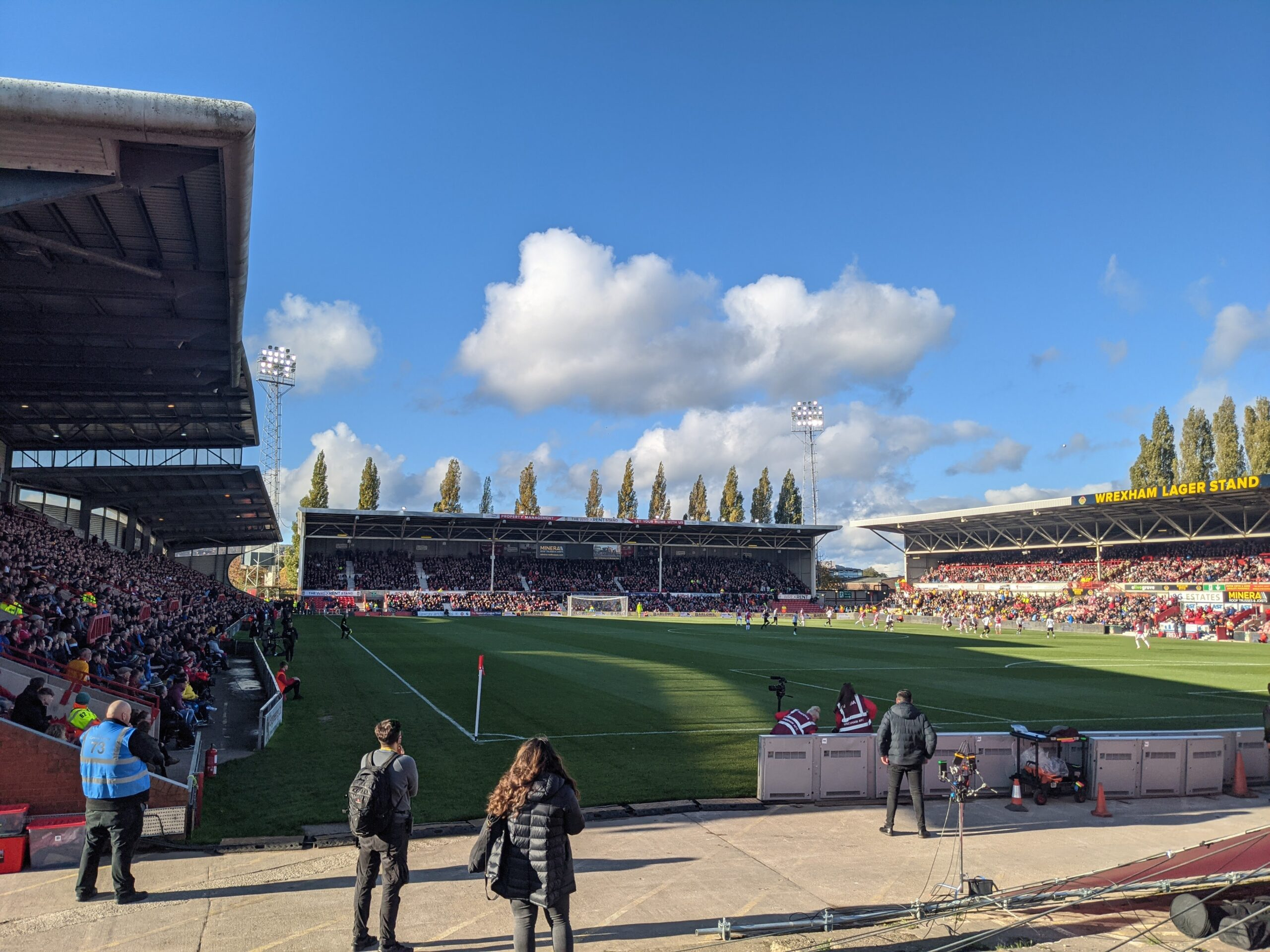
    When Ryan Reynolds and Rob McElhenney took over Wrexham AFC, they held a press conference in the middle of the stands, and then went out to speak to the fans on the pitch. We provided the audio for that moment. The cameras and the broadcast were other people’s job. The sound of the new owners addressing the club for the first time was ours.

    That is the visible end of matchday AV management in Wales, the bit that makes the news. But most of what matchday AV management involves happens every other week, with no cameras around, and it is worth understanding what actually goes into it.

    Matchday AV is live event production, every week

    A football matchday is a live event with a fixed kick-off and no second take. The crowd arrives, the announcements have to land, the music has to hit at the right moment, and the safety messages have to be heard by everyone, clearly, no matter what else is going on.

    Our relationship with Wrexham AFC goes back a long way, and it predates PSL itself. Years ago, when the stadium had been under-invested in, I was looking after its audio infrastructure. For a long time after that, we carried out the annual audio safety checks on the ground, making sure the system was safe to use.

    After the takeover, everything accelerated. We were brought in for the early events: the press conferences, the talks on the pitch, and the international fixtures, where we work alongside the AV company brought in by the visiting football association. Today we provide technical support at every home match.

    What we run on a matchday

    The kit list for a matchday is smaller than people expect, because the skill is not in the amount of equipment, it is in how reliably it all works together.

    At the heart of it is an Allen & Heath SQ mixer. The announcer uses a JTS UF-20 wireless microphone. Music and walkout tracks run from a MacBook using QLab, which is show-control software that fires the right track at the right moment with no fumbling for a play button. The scoreboard feed comes into the same desk, so anything playing on the screen is part of the same mix.

    None of that is exotic. What makes it work is that it has been specified to do one job extremely well, week in and week out.

    The clever bit: ducking

    Here is the detail that separates a polished matchday from a messy one. Both the announcer’s microphone and the scoreboard feed automatically duck the music.

    Ducking means that the moment the announcer speaks, or the scoreboard plays an advert or a clip, the music drops underneath it on its own. No one has to reach for a fader. When the announcement finishes, the music comes back up. It happens automatically, every time.

    It sounds small, but it is the difference between a stadium that sounds professional and one where the announcer is fighting the music for the crowd’s attention. When ducking is set up properly, the audience never notices it, which is exactly the point.

    The same principle covers the most important audio of all: safety announcements. They have to cut through instantly and clearly, with no manual intervention required, and the system is built so they always do.

    It takes a person who knows the ground

    Equipment does not run a matchday. People do. Cerys is PSL’s technical lead on most matchday operations, and she knows that ground and that routine inside out.

    That familiarity matters more than any single piece of kit. Someone who knows where every cable runs, what the announcer needs, and how the day flows will keep a matchday running smoothly in a way that no spec sheet can capture.

    From safety checks to a UEFA tournament

    The work has grown a long way from those early audio safety checks. For one season we ran the full fanzone at the Racecourse: a stage in the corner of a marquee, a full PA, moving head lights, a flown lighting truss, an LED video wall for content, and an automatic ducking system for safety announcements so nothing was ever left to chance. The fanzone paused when the new stand began construction, and I hope they bring it back.

    We have also provided AV for the club’s conferences and town hall meetings, the smaller-set, projector-and-audio end of the work. And in summer 2026, we are the AV supplier at the Racecourse Stadium for the UEFA Under-19 European Championship finals matches being held in Wales.

    Looking back at where the relationship started, the simplest way I can put it is this: we’ve grown together.

    If you run a club or a venue and you are thinking about your own special events and sports production, the same principles apply at every level. For more on the atmosphere side specifically, see our piece on sports presentation AV.

    Frequently asked questions

    What does matchday AV management involve?

    The stadium PA, the announcer’s microphone, walkout and goal music, and the audio feed from the scoreboard, all mixed live so announcements, adverts, and music never fight each other. It also includes the safety announcement system, which must be clear and reliable at all times.

    What is audio ducking on a matchday?

    Ducking automatically lowers the music when the announcer speaks or when the scoreboard plays a clip. We set both the wireless mic and the scoreboard feed to duck the music with no manual intervention.

    What equipment runs a football club matchday?

    Our setup uses an Allen & Heath SQ mixer, a JTS UF-20 wireless announcer microphone, and a MacBook running QLab for music and walkout tracks, with the scoreboard feed routed in and automatic ducking across the whole system.

    Do you provide AV for sports events across Wales?

    Yes. We provide matchday AV, sports presentation, and event production for clubs and stadia across Wales and the wider UK.

    Running a club or stadium in Wales?

    Whether you need matchday support, a ground PA that actually works, or production for a one-off fixture, we have done it at the highest level a club in Wales can ask for. Get in touch and we will talk through what your matchday needs.

    Darren Hughes is Director of Pivotal Sound & Lighting, an AV and event production company based in Llay, Wrexham, North Wales. PSL provides matchday AV, sports presentation, and event production for clubs and venues across Wales and the UK, including ongoing technical support at Wrexham AFC’s Racecourse Stadium.